
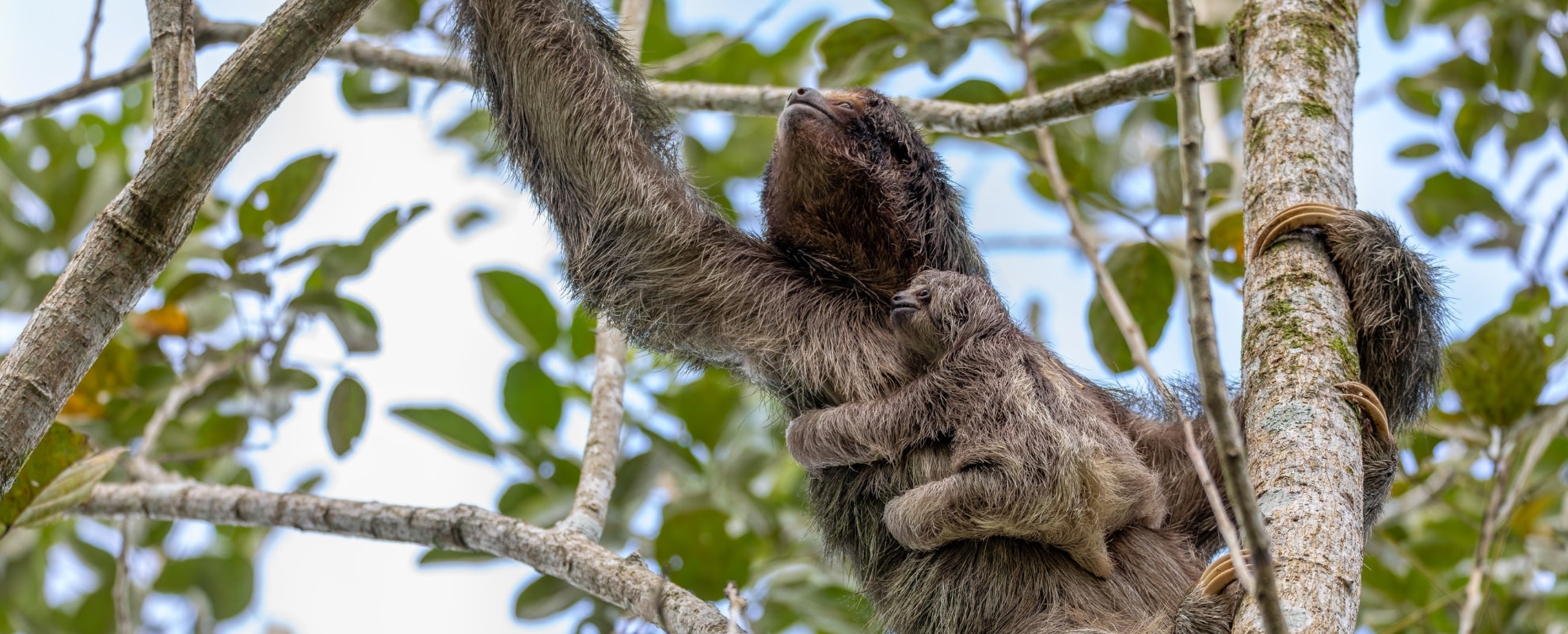

Where and When to See Two-Toed and Three-Toed Sloths in Costa Rica
Costa Rica is one of the premier wildlife destinations in the world, and spotting a sloth nestled high up in the lush canopy is a bucket-list dream for many travelers. Two species call the country home: the brown-throated three-toed sloth(Bradypus variegatus) and Hoffmann’s two-toed sloth (Choloepus hoffmanni).
While both species live in the tropical lowlands and mid-elevation rainforests, their daily rhythms, physical traits, and preferred habitats differ significantly.
Two-Toed vs. Three-Toed Sloths: Key Differences
Knowing what to look for makes spotting them in the dense jungle much easier:
Best Places to See Sloths in Costa Rica
1. Manuel Antonio National Park (Central Pacific)
-
Species Found: Both two-toed and three-toed sloths.
-
Why It’s Great: One of the most accessible locations in the country. The forest trails directly behind Espadilla Sur and Manuel Antonio beaches regularly yield sightings, often right near eye level.
2. La Fortuna & Arenal Volcano (Northern Lowlands)
-
Species Found: Both species, with high concentrations of two-toed sloths in private reserves.
-
Why It’s Great: The secondary rainforest around Arenal provides abundant food sources like Cecropia trees.Dedicated “Sloth Trails” (Senderos de Perezosos) and nocturnal guided walks around La Fortuna offer some of the highest sighting probabilities in the country.
3. Cahuita National Park & Puerto Viejo (South Caribbean)
-
Species Found: Both species, especially abundant three-toed sloths.
-
Why It’s Great: The Caribbean slope is warmer, humid, and green year-round. Along the flat coastal trail from Cahuita town to Puerto Vargas, sloths frequently hang right above the trail path and shoreline trees.
4. Tortuguero National Park (Northern Caribbean)
-
Species Found: Predominantly two-toed and three-toed sloths in riverine corridors.
-
Why It’s Great: Since access is primarily by boat, boat safaris along the jungle canals allow you to scan the high canopy without ground vegetation blocking your view.
5. Corcovado National Park & Drake Bay (Osa Peninsula)
-
Species Found: Both species in primary, untouched rainforest.
-
Why It’s Great: For adventurous travelers, Corcovado provides sightings of sloths in a raw, biologically intense environment alongside tapirs, pumas, and scarlet macaws.
When to See Sloths: Time of Day and Season
Best Time of Day
-
For Three-Toed Sloths (Morning: 7:00 AM – 10:30 AM): Because three-toed sloths are active during the day,they climb to outer branches early in the morning to sunbathe and regulate their body temperature. This makes them significantly easier to spot before midday heat sets in.
-
For Two-Toed Sloths (Night: 6:00 PM – 8:30 PM): Two-toed sloths sleep curled up in dense tangles of vines during the day. Take a licensed night walk with an experienced naturalist guide carrying a certified spotlight to watch them feed and climb after sunset.
Best Time of Year
Sloths do not migrate or hibernate, meaning they can be seen year-round in Costa Rica.
-
Dry Season (December to April on the Pacific): Easier hiking conditions and clearer weather, though crowds are higher.
-
Green Season (May to November on the Pacific): The rainforest is lush, foliage is dense, and wildlife is active,especially in the early mornings before afternoon rains begin.
-
Caribbean Note: The South Caribbean (Puerto Viejo, Cahuita) experiences its driest, sunniest months during September and October, which are fantastic months for coastal sloth spotting.
Essential Tips for Spotting Wild Sloths
-
Hire an ICT-Certified Naturalist Guide: A trained guide brings a high-powered spotting scope. Sloths naturally grow green micro-algae on their fur as camouflage, making them blend almost invisibly into tree branches without optical gear.
-
Scan Cecropia (Guarumo) Trees: Cecropia trees have large, umbrella-shaped leaves with hollow trunks. They are a staple food source for three-toed sloths and have relatively open branches, making sloths far easier to pinpoint.
-
Practice Responsible Wildlife Viewing: Costa Rica strictly enforces the #StopAnimalSelfies campaign. Never pay to hold, pet, or pose next to a sloth. Always maintain at least a 3-meter (10-foot) distance, keep noise levels low,and never use flash photography.
