
The Ultimate Rainforest Night Walk Guide: Essential Gear & Wildlife Safety
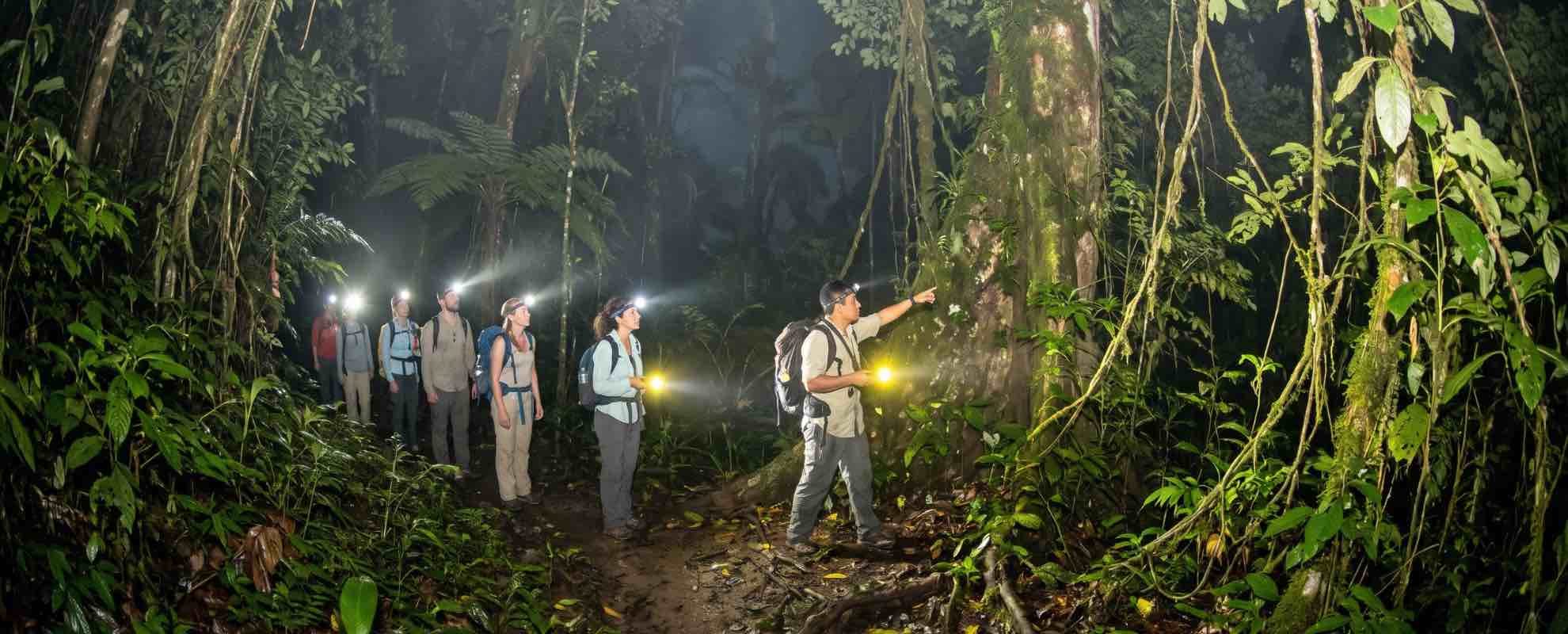
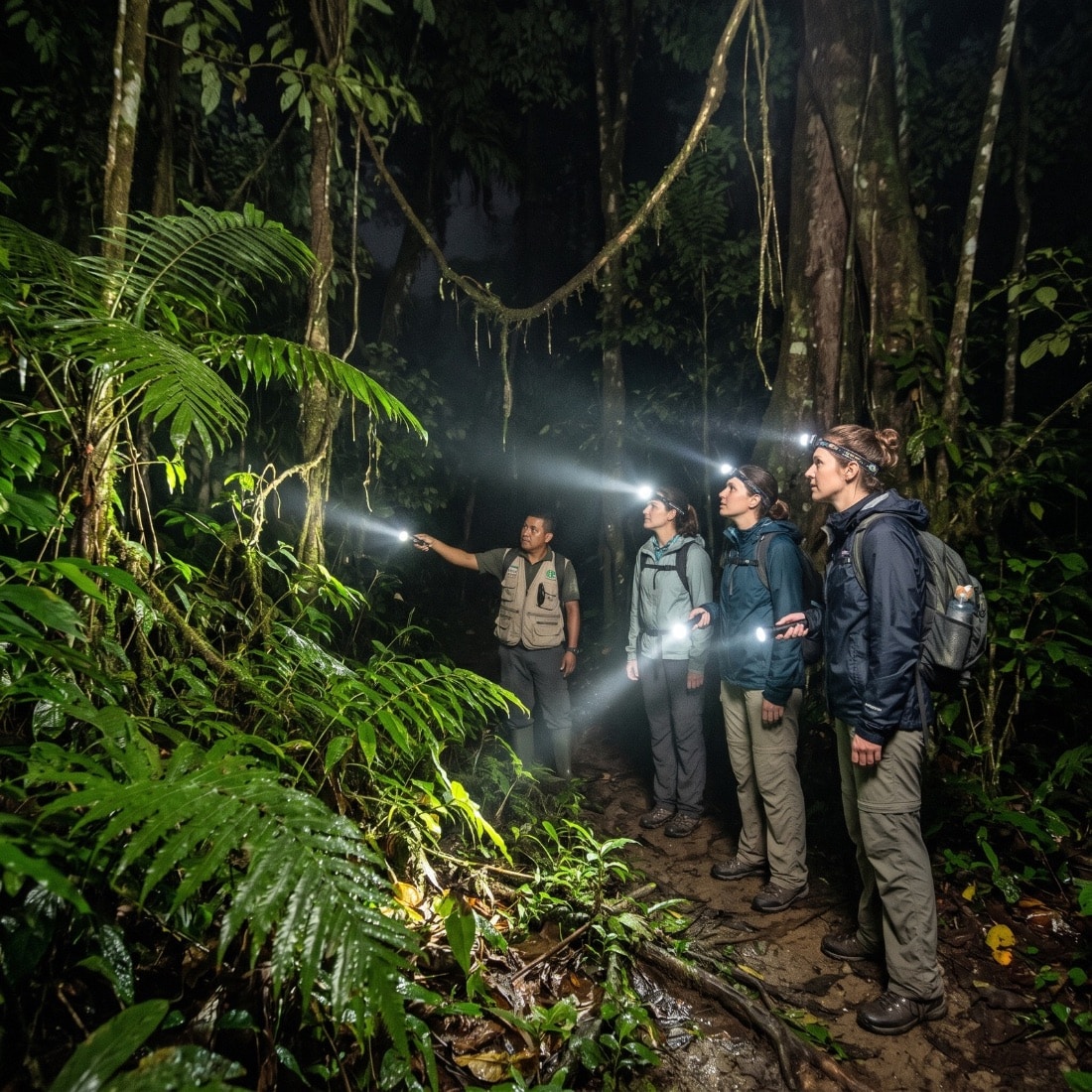
When the tropical sun dips below the canopy, the rainforest transforms. Over 60% of tropical wildlife is nocturnal,meaning the dark brings forth vibrant tree frogs, bioluminescent fungi, hunting arachnids, sleeping birds, and elusive reptiles.
Exploring the jungle after dark is one of the most thrilling eco-adventures you can experience, but it demands proper preparation, situational awareness, and respect for the ecosystem. Here is everything you need to pack and know to stay safe, dry, and sharp on the trail.
Essential Gear Checklist for a Jungle Night Hike
Navigating wet, uneven root systems in total darkness requires purpose-built gear. Prioritize hands-free mobility and reliable illumination.
1. Hands-Free Illumination & Spotting Lights
-
Primary Headlamp (200–450 lumens): A headlamp keeps your hands free to catch your balance or adjust camera gear. Look for water-resistant models (IPX4 or higher) with an adjustable beam angle.
-
Red-Light Mode Feature: White light can disorient wildlife and ruin night-adjusted vision. A headlamp with a red-light filter lets you observe frogs and mammals without distressing them.
-
Backup Handheld Flashlight: Rainforest humidity and sudden downpours drain batteries quickly. Always carry a secondary compact torch in your pocket.
2. Protective Footwear & Apparel
-
Tall Rubber Muck Boots or High-Ankle Hiking Boots: Rubber calf-height boots are the gold standard on tropical night trails. They provide a barrier against deep mud, stinging ants, and ground-dwelling vipers.
-
Long, Lightweight Breathable Pants: Avoid shorts. Wear ripstop nylon or quick-dry cargo pants tucked directly into your socks or boot shafts to prevent crawling insects from reaching bare skin.
-
Long-Sleeved Moisture-Wicking Shirts: Keeps mosquitoes off your forearms while offering breathability in high-humidity microclimates.
-
Packable Lightweight Poncho or Rain Shell: Weather shifts instantly in the canopy. Keep an unlined rain shell accessible at the very top of your daypack.
3. Protection & Optics
-
EPA-Approved Insect Repellent: Formulas containing 20–30% DEET or Picaridin are effective against tropical mosquitoes, chiggers, and biting midges.
-
Dry Bag or Waterproof Daypack Cover: Protect phones, cameras, and lenses from sudden showers and ambient condensation.
Jungle Safety: Precautions for Snakes and Insects
Encounters with venomous reptiles and biting arthropods are manageable when you follow standard jungle protocol.These animals rarely seek confrontation; defense mechanisms only trigger when they feel stepped on, cornered, or touched.
The Golden Rule: Never Touch Foliage Blindly
Never grab tree trunks, low-hanging branches, or handrails without inspecting both sides with your flashlight first.
-
Many arboreal vipers (such as eyelash pit vipers) rest coiled on slim branches at chest or head height.
-
Bullet ants, urticating caterpillars, and spiny palms often rest directly along narrow trail brush.
Mind Your Foot Placement
-
Step onto fallen logs rather than over them. A snake may be resting directly beneath the blind side of the trunk.
-
Stay centered on the established trail. Avoid kicking through deep leaf litter, where terrestrial pit vipers blend seamlessly with decaying leaves.
Respecting Snakes on the Trail
-
Maintain Distance: Keep at least two full body lengths between yourself and any snake. Striking range for most pit vipers is roughly one-third to one-half of their total length.
-
Never Corner the Animal: Allow the snake a clear retreat path.
-
Freeze and Alert: If you spot a snake close to your feet, stop moving immediately and notify your group leader or guide before backing away slowly.
Managing Stinging and Biting Insects
-
Spray Clothes, Not Trails: Apply insect repellent at the trailhead before entering the primary forest. Avoid spraying directly on hands, camera lenses, or nearby vegetation.
-
Check Your Gear Before Putting It Down: If you set a daypack on a bench or fallen log, illuminate the underside before picking it back up to ensure scorpions or wandering spiders haven’t sought shelter beneath it.
Why You Should Always Walk With a Certified Local Guide
While marked self-guided night paths exist in select reserves, venturing off into primary tropical rainforest with a certified naturalist guide provides two critical advantages:
-
Trained Spotting Eyes: Most nocturnal species have evolved elaborate camouflage. Experienced naturalist guides know how to look for eyeshine reflection, identify distinct mating calls, and spot tiny glass frogs perched under leaves that untrained eyes walk past.
-
Immediate Risk Mitigation: Professional guides carry high-power spotting scopes, check trail branches ahead of the group, and know local medical protocols in the rare event of an emergency.
Rainforest Night Walk FAQ
Are rainforest night walks safe for beginners?
Yes, provided you stay on maintained reserve trails with a certified naturalist guide, wear closed-toe footwear with long pants, and refrain from touching branches or reaching into crevices.
What camera settings work best for night wildlife photos?
Use an external diffused flash or guide’s spot beam rather than a harsh bare pop-up flash. Set an ISO between 800 and 3200, use an aperture around f/4 to f/5.6 for adequate depth of field, and keep shutter speeds near 1/125s to prevent motion blur on handheld macro shots.
Can I wear running shoes or sandals on a night hike?
Open-toed sandals are strictly prohibited by reputable operators. Running shoes are acceptable on dry boardwalk sections,but waterproof high-traction hiking boots or calf-length rubber boots provide the necessary protection against mud,insects, and low-lying brush.
