

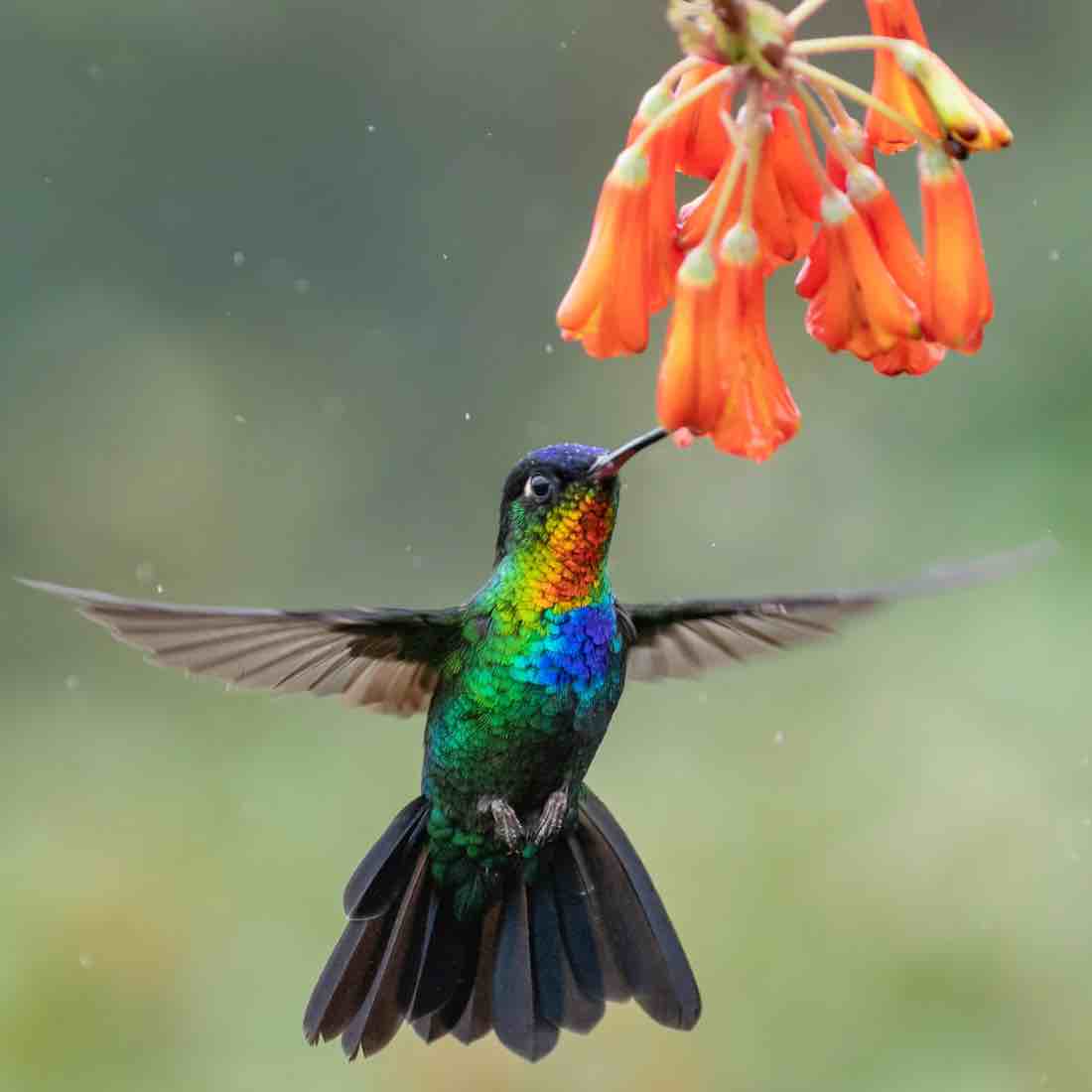
Best Spots for Hummingbird Photography in Costa Rica: The Ultimate Birder’s Guide
Costa Rica is home to more than 50 distinct hummingbird species, packing one of the planet’s highest concentrations of iridescent avian gems into a territory roughly the size of West Virginia. From highland endemics flashing vivid gorgets in the chilly mist to lowland giants darting through lush rainforests, capturing these hyper-fast subjects requires pristine natural light, active feeders, and the right strategic locations
1. San Gerardo de Dota & Cerro de la Muerte (Highland Talamancas)
Perched along the cordillera between 2,200 and 3,100 meters above sea level, the oak cloud forests of Cerro de la Muerte offer arguably the most dramatic hummingbird photography in Central America. The crisp, thin air and subdued highland light make it significantly easier to manage contrast and control blown-out iridescent highlights.
-
Top Target Species: Fiery-throated Hummingbird (Panterpe insignis), Talamanca Hummingbird (Eugenes spectabilis), Volcano Hummingbird (Selasphorus flammula), White-throated Mountain-gem (Lampornis castaneoventris).
-
Why It Excels for Photographers: Lodges such as Savegre Hotel, Paraíso Quetzal, and Dantas Lodge maintain dedicated nectar stations surrounded by natural perches like moss-draped branches, bromeliads, and native salvias.This setup lets you compose natural, feeder-free perching portraits without visible artificial plastic.
-
Best Shooting Conditions: Early morning hours (6:30 AM – 9:30 AM) when activity peaks and before highland rain clouds condense.
2. Monteverde & Santa Elena Cloud Forest Reserves
Situated along the Continental Divide in the Tilarán mountain range, Monteverde provides misty, atmospheric backdrops where cloud forest moisture and deep green canopy foliage create rich, moody bokeh.
-
Top Target Species: Violet Sabrewing (Campylopterus hemileucurus), Purple-throated Mountain-gem (Lampornis calolaemus), Green-crowned Brilliant (Heliodoxa jacula), Stripe-tailed Hummingbird (Eupherusa eximia).
-
Key Photo Hotspots: The Hummingbird Gallery (Café Colibrí) right outside the entrance of Monteverde Cloud Forest Reserve, as well as the feeder gardens at Selvatura Park.
-
Photography Pro-Tip: The ambient light inside the dense cloud forest canopy is consistently low. Pack fast telephoto glass (f/2.8 or f/4) and be prepared to shoot between ISO 1600 and 6400 to maintain shutter speeds above 1/2000s without flash.
3. Cinchona & Poás Slopes (Caribbean Foothills)
Located just an hour and a half north of the Central Valley on the road connecting Poás Volcano with the northern plains,the Caribbean-facing mountain slope near Cinchona acts as a transitional altitude haven.
-
Top Target Species: Northern Emerald-Toucanet and prong-billed barbets often share perches with Black-bellied Hummingbird (Eupherusa nigriventris), White-bellied Mountain-gem, and Coppery-headed Emerald (Microchera cupreiceps—a Costa Rican endemic).
-
Key Hotspot: El Mirador de San Fernando (The Waterfall Cinchona). The open-air balcony overlooks a dramatic canyon and San Fernando waterfall, with eye-level fruit and nectar stations allowing natural-depth backgrounds.
4. Bajos del Toro & Central Volcanic Range
The rugged canyonlands nestled between Poás and Juan Castro Blanco National Park receive abundant Caribbean precipitation, resulting in hyper-dense mossy forests and dramatic moss-covered river ravines.
-
Top Target Species: Green Hermit (Phaethornis guy), Violet Sabrewing, Black-bellied Hummingbird, Snowcap (Microchera albocoronata on lower eastern edges).
-
Photographic Appeal: Catarata del Toro and local garden lodges maintain manicured pollinator corridors filled with native Stachytarpheta (porterweed) and Heliconia, enabling authentic action photography of hummingbirds hovering naturally beside native blooms.
5. Braulio Carrillo Caribbean Foothills & Sarapiquí
Descending toward the northern Caribbean lowlands, the rainforest canopy shifts toward broadleaf tropical forest. Here,deeper shadows and dense understories host secretive hermit species and tiny gems that rarely venture into the highlands.
-
Top Target Species: Snowcap (the holy grail of small hummingbirds, renowned for its glowing white cap and deep wine-colored plumage), Bronze-tailed Plumeleteer (Chalybura urochrysia), Crowned Woodnymph (Thalurania colombica), Long-billed Hermit (Phaethornis longirostris).
-
Key Hotspots: El Tapir Nature Reserve (famous for reliable Snowcap sightings on verbena hedges) and the biological reserves surrounding La Selva and Puerto Viejo de Sarapiquí.
Essential Gear & Settings for Hummingbird Photography
Ethical Field Practices for Nature Photographers
-
Avoid Flash Saturation on Nesting Birds: Use artificial multi-flash setups only at established feeder perches,never near active nests.
-
Prioritize Native Perches: Set up dry mossy branches and local blossoms 2 to 3 feet in front of feeders to photograph natural behaviors and eliminate plastic feeders from the frame.
-
Respect Feeding Cadence: Allow birds uninterrupted access to feeders, especially during early mornings and late afternoons when energy expenditure is critical.
