Ziplining in Costa Rica: Safety Standards & The Longest Canopy Tours in Monteverde
Ziplining in Monteverde differs fundamentally from coastal or dry-forest canopy tours. The high altitude, microclimate,and sheer topography create a multi-sensory immersion:
Safety Standards & Rigging Protocols in Costa Rica
Reputable adventure operators in Costa Rica adhere to stringent engineering and operational benchmarks, frequently aligned with the Association for Challenge Course Technology (ACCT) and certified by the Costa Rican Tourism Board (ICT).
-
Dual-Cable Redundancy: Premium circuits utilize dual galvanized steel aircraft cables or high-strength redundant safety tethers. Even if a primary connection were compromised, a backup line keeps the rider fully secured.
-
Commercial Braking Systems: Early canopy designs relied heavily on leather hand-braking. Modern Monteverde circuits feature passive gravity run-outs, automated magnetic or zip-stop braking, and guide-operated friction lines to ensure smooth landings on every platform.
-
Certified Hardware: Harnesses, high-speed dual pulleys, and locking carabiners meet CE (Conformité Européenne) and UIAA (International Climbing and Mountaineering Federation) safety ratings.
-
Daily Rigging Inspections: Licensed operators conduct daily cable tension tests, hardware wear audits, and structural platform reviews before the first flight of the day.
Classic Sitting vs. “Superman” Flight: What to Expect
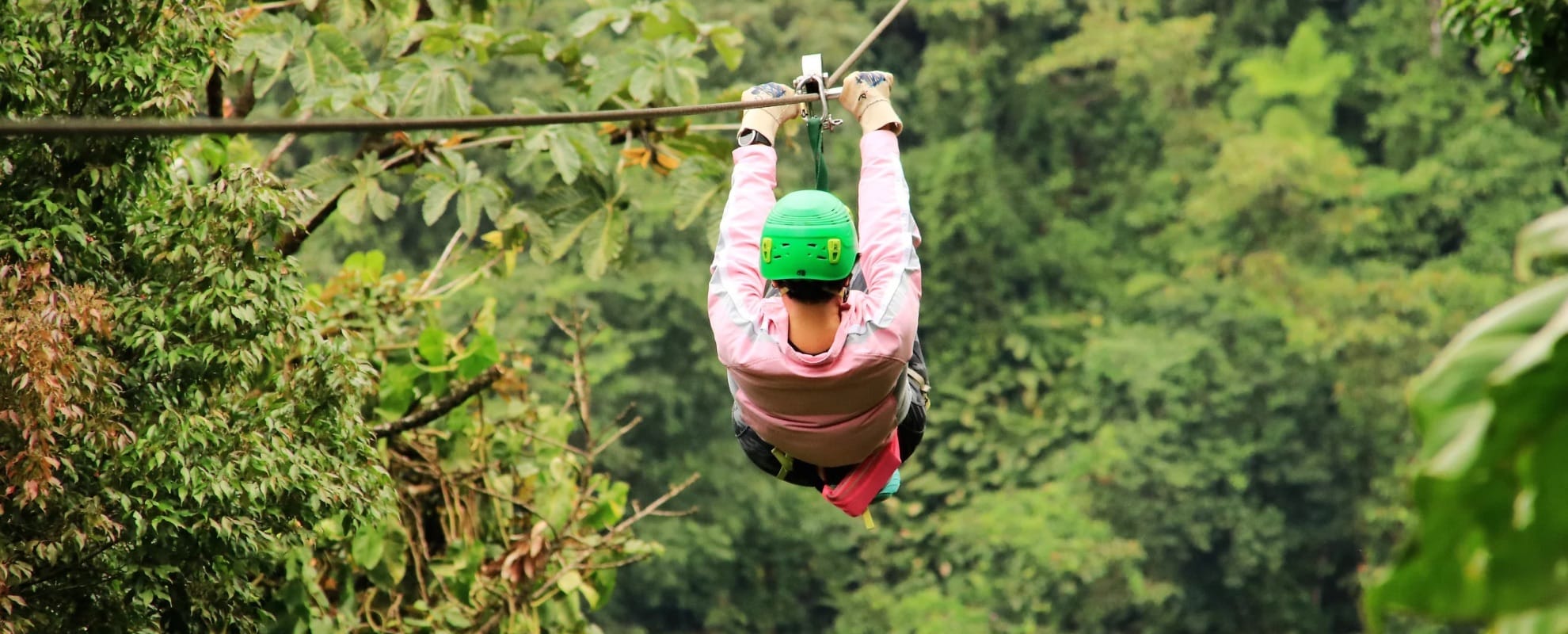
Monteverde’s signature adventure feature is the Superman harness, which secures riders horizontally facing forward rather than seated upright:
-
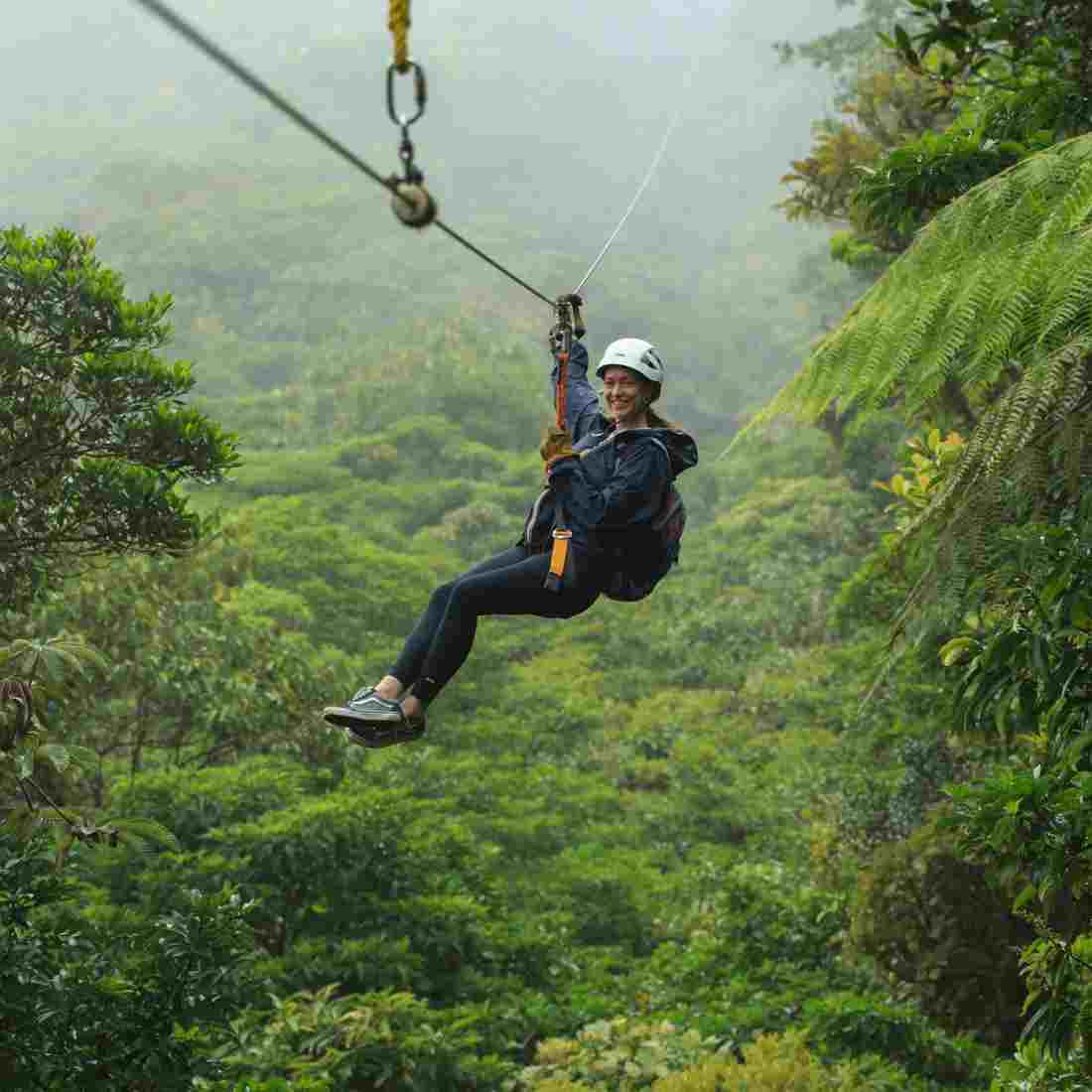
Classic Upright: Seated harness, ideal for taking in lateral 360-degree views, easy platform landings, and accessible for all comfort levels.
-
Superman Style: Full-body chest and thigh harness. You fly face-first over deep valleys with minimal wind resistance, maximizing speed and the sensation of free flight across kilometer-long spans.
What to Wear & Essential Preparation
-
Footwear: Closed-toe hiking shoes or sturdy sneakers are mandatory. Sandals, flip-flops, and water shoes with open heels are not permitted on platforms.
-
Layering: Monteverde’s cloud forest is cool and windy, with temperatures often hovering between 15°C and 22°C (59°F–72°F). Wear breathable athletic layers and a lightweight, waterproof rain shell.
-
Action Cameras: Phones must be kept in zippered pockets. If using an action camera, bring a secure helmet mount or chest harness; hand-held selfie sticks are prohibited on high-speed cables.
1. Launching into the Thermal Shift
Standing on a wooden platform anchored to a 150-year-old strangler fig tree, the air smells intensely of damp moss, wild orchids, and wet volcanic soil. The moment you push off the deck:
-
The Sudden Drop: Your stomach drops slightly as the harness catches your full weight, followed instantly by steady acceleration.
-
The Temperature Drop: Within seconds, the ambient temperature drops 3 to 5 degrees Celsius as you shoot over deep river valleys and cut through rushing air currents along the Continental Divide.
2. Slicing Through the “Bajura” (Mist & Clouds)
On the longest cables (exceeding 1,000 meters), visibility often shifts mid-flight. You may take off in diffuse sunlight,slice through a dense layer of hanging cloud mist where water droplets bead up on your jacket and goggles, and emerge seconds later over a sunlit canyon opening. The iconic metallic hum of the steel pulley wheel against the cable is the only constant sound against the silent forest expanse.
3. The Perspective Shift: Canopy Topography
From hiking trails, cloud forest trees look like towering green walls. From 400 feet above:
-
The forest floor vanishes beneath an unbroken canopy blanket of bromeliads, giant ferns, and lichens.
-
On clear morning runs, breaks in the ridgelines reveal views extending all the way toward the Nicoya Peninsula on the Pacific horizon.
Anatomy of the Tour: Step-by-Step Flow
To set realistic expectations for first-timers, here is how the 2.5-hour experience unfolds on the ground:
-
Gear Fitting & Safety Briefing (20 min): Guides fit high-grade seat/chest harnesses, helmets, and heavy leather hand-protectors. You practice body positioning (knees up, core engaged, non-dominant hand steadying the lanyard).
-
The Progression Runs (30 min): Every circuit begins with 2 to 3 short, low-elevation cables (50–100 meters).These short runs calibrate your braking awareness, balance, and trust in the system.
-
The Deep Valley Crossings (45 min): The tour steps up into the high-canopy phase, linking suspension bridges,treetop platforms, and canyon-to-canyon cables that stretch beyond 500 meters each.
-
The Signature Climax (25 min): The final legs typically feature the longest cable (the 1-kilometer to 1.5-kilometer mega-zip flown Superman-style) followed by the optional, adrenaline-heavy Tarzan swing freefall.
-
